Modern root canal treatment is calm, careful and focused on one goal: removing infection and saving your natural tooth. Dr Monika Magee explains what to expect at every stage.
Book a Consultation
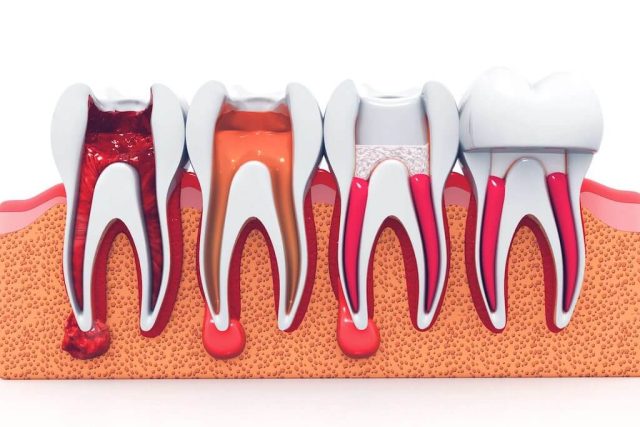
A tooth has two main parts: the crown (visible above the gum) and the root (surrounded by bone). Inside is a small space containing the pulp — nerves and blood vessels that run down narrow channels called root canals.
The most common cause of pulp damage is deep tooth decay. If bacteria reach the pulp, inflammation begins. Early on this can sometimes settle — but if it becomes severe, the pulp can die. Bacteria then spread through the root canals into surrounding tissue, potentially causing an abscess.
When the pulp can no longer recover, it must be removed so the surrounding tissues can heal. Root canal treatment carefully removes the damaged tissue, cleans and disinfects the canals, and seals them to prevent bacteria from returning.
The aim is simple: remove infection, relieve your symptoms, and — whenever possible — help you keep your natural tooth.
These symptoms may suggest the pulp inside a tooth has become significantly inflamed or infected. If you're experiencing any of them, come in so we can assess the tooth properly.
Swelling of the face or neck, rapidly increasing swelling, difficulty swallowing or breathing, or feeling generally unwell. Please contact us or go to an emergency service immediately.
These symptoms don't automatically mean you need root canal treatment — similar symptoms can have other causes. Equally, some teeth that do need treatment cause very little or no pain at all. An infection can be found on an X-ray during a routine check-up. We'll examine the tooth and take X-rays before deciding on the right path forward.
Root canal treatment is carried out carefully and step by step. Your comfort and safety are the priority at every stage.
A tooth that has needed root canal treatment has often already lost a significant amount of healthy structure through decay, cracks, large fillings or previous work. This can make it more vulnerable to fracture.
For this reason, the tooth will usually need to be protected with a stronger, more definitive restoration after treatment. Depending on how much natural tooth structure remains, this may be an:
In some cases, very little natural tooth structure remains after removing the decay and damaged tissue. There may not be enough to securely hold the final restoration.
In these situations, we may recommend placing a post inside the root canal to help retain it. In most cases, this is a glass-fibre post — a small stick fitted into one of the prepared root canals and incorporated into the final restoration.
A post is not required in every root-treated tooth. We will assess the tooth and discuss the appropriate restoration with you before treatment begins — so there are no unexpected costs or surprises later.
Factors that affect long-term outcome:
During root canal treatment, we remove infected or inflamed tissue from inside the tooth, disinfect the canals, and seal them as thoroughly as possible. But treating the inside is only part of the process.
A root-treated tooth may already have lost a significant amount of its natural structure. The final restoration is therefore vital in protecting the remaining tooth from fracture and restoring its function.
Depending on your individual situation, this may involve an inlay, onlay, or crown — and in some cases a glass-fibre post may be needed to help retain the restoration.
We discuss these options as part of your treatment plan before starting the root canal, so you understand the full picture from the beginning — with no unexpected costs or surprises.
I know that most people have heard a root canal horror story from a friend, family member, or someone they know. If you've been told you need root canal treatment, those stories can understandably make you feel anxious.
The good news is that modern root canal treatment doesn't have to be a frightening experience. Modern techniques, equipment, and anaesthesia allow us to carry out treatment carefully and comfortably.
If you're feeling nervous, please don't be afraid to tell us. There's no need to feel embarrassed or worried about asking questions. Sometimes simply understanding what's going to happen can make a big difference.
Rather than worrying beforehand, come in for a chat. I can explain what root canal treatment involves, what you can expect during the procedure, and what we can do to make you as comfortable as possible. You don't have to face the treatment feeling anxious or uncertain. Let's talk about it first.
Every tooth and every patient is different. Come in and Monika will take the time to discuss your particular situation, answer your questions, and explain exactly what root canal treatment would involve for you.
Send an Enquiry